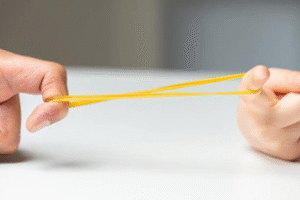
 Relationships are living systems. They are designed to flex, adapt, and endure pressure over time. Like any system under strain, some tension can strengthen a bond, while too much stress can quietly weaken it. The difference lies in elasticity. Relationship elasticity refers to the capacity of a connection to stretch under pressure, recover from disruption, and return to stability without losing its core integrity.
Not all relationships that stretch grow stronger. Some are slowly pulled past their limits, not in dramatic moments, but through repeated small strains that never fully resolve. Understanding what makes a relationship elastic, and what causes it to fracture, helps clarify whether a connection can recover or whether it is being asked to carry more than it can sustain.
Relationships as Adaptive Systems
Healthy relationships are not static. They change as people grow, circumstances shift, and stressors emerge. Elastic systems absorb pressure and redistribute it. Rigid systems crack. Overextended systems thin out until something gives.
In relationships, elasticity depends less on intensity or longevity and more on structure. Strong feelings alone do not create resilience. The ability to respond to strain in constructive ways does.
Core Components of Relationship Elasticity
Trust – Trust creates the baseline safety needed for elasticity. It allows partners to assume goodwill, even during conflict. Without trust, every strain feels threatening, and recovery becomes harder with each rupture.
Communication – Elastic relationships rely on communication that is honest, responsive, and ongoing. This does not mean perfect communication, but it does mean a willingness to name issues early, clarify misunderstandings, and stay engaged even when conversations are uncomfortable.
Repair Capacity – All relationships experience breaks. What matters is the ability to repair. Repair includes acknowledging harm, taking responsibility, expressing remorse, and making meaningful changes. Relationships with strong repair capacity can stretch and rebound. Those without it accumulate damage.
Emotional Safety – Emotional safety allows vulnerability without fear of punishment or dismissal. It is the sense that one can express needs, doubts, or discomfort without being met with defensiveness, withdrawal, or control.
Mutual Responsibility – Elastic relationships require shared ownership. Both people take responsibility for the health of the connection, not just their individual experiences. When responsibility becomes one sided, elasticity quickly erodes.
When Stretching Turns into Damage
However, not all strain is healthy. Relationships begin to break when tension shifts from temporary and responsive to chronic and unresolved.
Early signs of unhealthy strain often look subtle. Conversations go in circles. Repair attempts are delayed or avoided. Emotional bids are met with distance rather than engagement. Over time, this creates emotional withdrawal, resentment, and a quiet loss of trust.
Eventually, the relationship stops returning to baseline. Instead of bouncing back, it settles into a state of ongoing tension. This is where elasticity gives way to exhaustion.
Repairable Strain Versus Structural Damage
Repairable strain involves stress that is acknowledged, addressed, and met with mutual effort. Structural damage occurs when core components like trust, safety, or responsibility are repeatedly violated without repair.
Indicators that recovery is likely include:
- Both partners acknowledge the strain and their role in it
- There is consistent follow-through, not just promises
- Repair attempts lead to measurable change
- Emotional safety improves over time
Indicators that recovery may no longer be healthy to pursue include:
- Ongoing dismissal of concerns
- Repeated boundary violations
- Chronic emotional withdrawal
- One partner carrying the full weight of repair
- A steady decline in trust and safety despite effort
 Conclusion
Resilient relationships are not defined by the absence of strain, but by how they respond to it. Elastic connections bend, repair, and return to center without losing their core structure. Fragile ones either snap under pressure or slowly thin until nothing stable remains. Understanding relationship elasticity allows for more honest decision making. It helps distinguish between challenges that can strengthen a bond and patterns that quietly erode it.