It’s amazing how, regardless of our similar experiences that two people handle the same situation differently. One ends up in a calm, productive conversation, while the other in a full escalation. The difference isn’t personality, it’s approach.
The Moment Things Go Wrong
Imagine a customer who’s already had a bad experience. They’ve called before, maybe twice, they’re irritated, maybe a little sharp in their tone. The instinct on the other side is to fix it fast. “Okay, here’s what we can do…” Logically, that should help. But instead, the customer pushes back harder. They repeat themselves. They begin to escalate.
What just happened? The problem wasn’t the solution. It was the timing. When someone doesn’t feel understood, offering a solution can feel dismissive, even if it’s the right one. And once that happens, the conversation shifts from problem-solving to proving a point.
The Shift That Changes Everything
The most effective customer service professionals follow a different sequence:
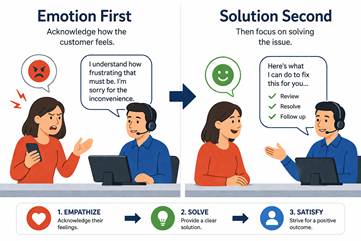
Emotion first à Solution second
This isn’t because it sounds nice, it’s because it works. When someone feels heard, their posture changes, their edge softens, they stop repeating themselves, and they start engaging.
What That Looks Like in Practice
The approach isn’t all about long apologies or scripted empathy. It’s about precision. A strong response sounds more like: “I can hear how frustrating this has been. Especially if you’ve already called a few times. Let’s walk through what we can do to fix this.”
That does three things quickly:
-
- Acknowledges the emotion
-
- Shows you understand the situation
-
- Moves forward without rushing
It’s a small shift, but it changes the trajectory of the conversation.
Letting People Talk (Without Losing Control)
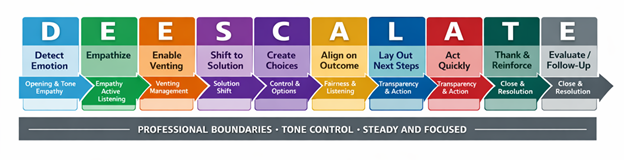
When people are upset or frustrated, you have to let them vent. Not indefinitely, and not passively, but intentionally. They need a short window to get it out, without interruption, correction, or steering too early. Remember, it’s not about you, it’s about them.
Most escalations don’t come from what the customer is saying, they come from being cut off while saying it. Letting someone finish doesn’t slow things down. It speeds up everything that comes after.
The Real Reason People Get Angry
Underneath many escalations are two things:
-
- The caller feels a loss of control
-
- The caller feels a sense that something isn’t fair
If you ignore those, no solution will feel complete. If you address them, even indirectly, the conversation settles.
Something as simple as: “Let’s make sure this is handled fairly.” Or: “We’ve got a couple ways we can approach this, what would you prefer?”
Now the customer isn’t just reacting, they’re participating.
Keeping the Conversation Moving Forward
When customers call or arrive, they are embedded in the past. They are tied to what has already occurred. If you stay in the past with them, the conversation loops. Effective responders acknowledge the issue, then gently shift forward: “Here’s what we can do next.” Or “Let’s focus on getting this resolved today.” This is not dismissive. It’s directional.
The Part No One Likes to Talk About
De-escalation doesn’t mean tolerating disrespect. It means handling it without pouring fuel on it. There’s a big difference between: “You can’t talk to me like that.” And: “I want to help, and I can do that best if we keep this respectful.” Tone carries more weight than wording here, and customers pick up on it instantly.
The Hidden Variable: You
The emotional level of the conversation is set by the person who stays the calmest.
-
- If a customer is at a 9 and the response comes back at a 7, the situation escalates.
-
- If the response comes back at a 3, the conversation starts to come down.
Slowing your pace slightly, lowering your tone, even adding a brief pause before responding, these aren’t soft skills, they’re control mechanisms.
When It’s Done Well
The goal isn’t just to resolve the issue. It’s to change how the customer feels about the interaction. Handled poorly, a small problem becomes a lasting frustration. Handled well, even a bad situation can turn into a moment where trust is re/built.
Sometimes that’s as simple as doing a little more than expected. For example: a follow-up, a waived penalty, or a clear explanation. Not because policy says to, but because the moment calls for it.
The Bottom Line
De-escalation isn’t about being nice, it’s about being effective under pressure. It’s knowing when to slow down, when to listen, and when to guide the conversation forward.
Most importantly, it’s understanding that people don’t accept solutions until they feel understood.